Request a quote
Your cart is empty.
You may check out all the available products and buy some in the shop.

Quick search:
When people go shopping for their dream hot tub, most don’t pause to think about maintenance. While Coast Spas hot tubs are much easier to maintain due to features such as powerful filtration, you need to be clear on how much maintenance your hot tub is going to take. The biggest factor? Chemicals.
Currently, there is no way to avoid using chemicals in your hot tub. I’m sorry to break it to you – you will have to commit to maintaining your hot tub! How important is it to get the chemicals right? We don’t want to scare you, but it can be disastrous if you’re not keeping on top of maintenance.
Who can be affected?
There have been several outbreaks of disease linked to poor water maintenance, including those in leisure centres, hotels, holiday homes, cruise ships and showroom displays. Scary right?
Everyone is susceptible to infection but there is a heightened risk with:
How bad are the effects?
We’re not writing this blog post to scare you, we just want to inform you! Properly maintained hot tubs will not give you any problems, and you can enjoy your hot tub any time of the year without fear of any infection. Problems arise when hot tub owners slack off with maintenance, taking the attitude of ‘I haven’t had any problems yet, I must be fine’. Please don’t be one of these people! There are so many nasty things that can contaminate your water and lead to problems:
Coliforms and E-coli.
E-coli can contaminate the spa via faecal matter. Coliforms occur in soil as well as faeces, so their presence alone indicates contamination. How many times have you jumped into your hot tub without washing off your feet first? It’s that easy! Proper sanitation will keep these types of bacteria away, so if you have a problem with this, you need to tighten up your water care routine.
Pseudomonas aeruginosa.
Numerous outbreaks of folliculitis caused by P aeruginosa are associated with spa pools and hot tubs. Hot Tub Folliculitis presents as a red rash caused by infection of the hair follicles, usually about 48 hours (but can be up to 5 days) after immersion in pool water. The degree of rash depends on how long you were in the contaminated water for, and just how contaminated the water is. Children tend to be more susceptible than adults.
Mycobacterium species
Respiratory disease has been associated with non-tuberculous mycobacteria, particularly Mycobacterium avium, in association with spa pools and hot tubs.
Other potential infections
Other infections such as amoebal, parasitic and other gastrointestinal infections, furunculosis (caused by Staphylococcus aureus) and Molluscum contagiosum (a viral skin infection producing papillomas) have also been associated with using spa pools.
Wow, that’s a lot of nasty stuff! Thinking you may as well just throw out your hot tub now? Wait! Like we said before, hot tubs are perfectly safe when you follow a proper maintenance regime. But what exactly does that regime look like? We’re here to show you!
What you should do every day
What you should do every week
What you should do every month
What you should do periodically

So, what chemicals should you use?
There are a lot of different chemicals mentioned in this blog post already! We’re here to cut through the confusion and tell you what you need to know about them. Starting with the most important: Sanitisation.
Sanitisers are an integral part of your hot tub maintenance regime, as they are responsible for killing all that nasty bacteria we spoke about earlier. They’re also great for helping to kill algae! The two most common sanitisers are Chlorine and Bromine.
|
Is it cheap? |
|
|
Chlorine is the cheaper and more common form of sanitation. |
The production costs of Bromine are significantly higher, making it the more expensive choice. |
|
Does it smell? |
|
|
Chlorine has that distinctive ‘clean smell’ that most of us are familiar with. If the hot tub is poorly maintained, this smell will become overpowering. |
Bromine is virtually odourless. |
|
How quickly does it take effect? |
|
|
Chlorine is very fast-dissolving, meaning it takes effect much faster. |
Bromine dissolves relatively slowly, however this is not a bad thing! |
|
Is it safe for sensitive skin? |
|
|
Chlorine can cause dry skin and hair, so is best avoided by people with sensitive skin. |
Bromine is safe for people with sensitive skin. |
You should test the levels of either chlorine or bromine regularly. This can be done with test strips that are easy to use and give you readings fast.
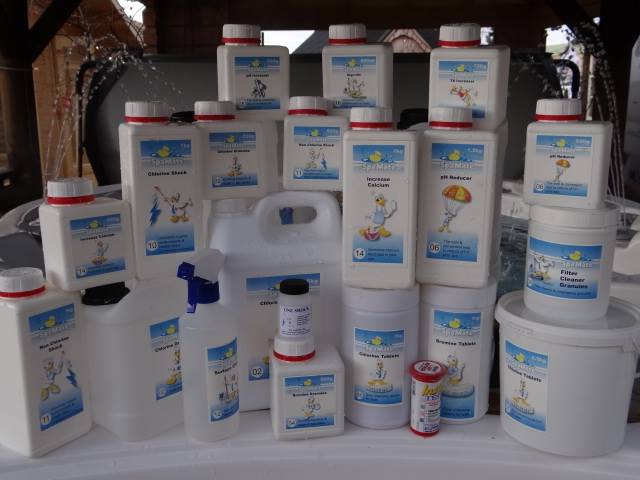
Oxidising your Hot Tub
Oxidising, also known as shocking, your hot tub regularly will help to destroy odours and other nastiness (such as perspiration, cosmetics and body oils). Oxidising also increases your comfort when in the Hot Tub and restores a bit of sparkle back into your water!
You should shock your Hot Tub every week using a non-chlorine shock. Regular shocking will also help to reduce the amount of sanitiser you use – win!
What else can Chemicals help with?
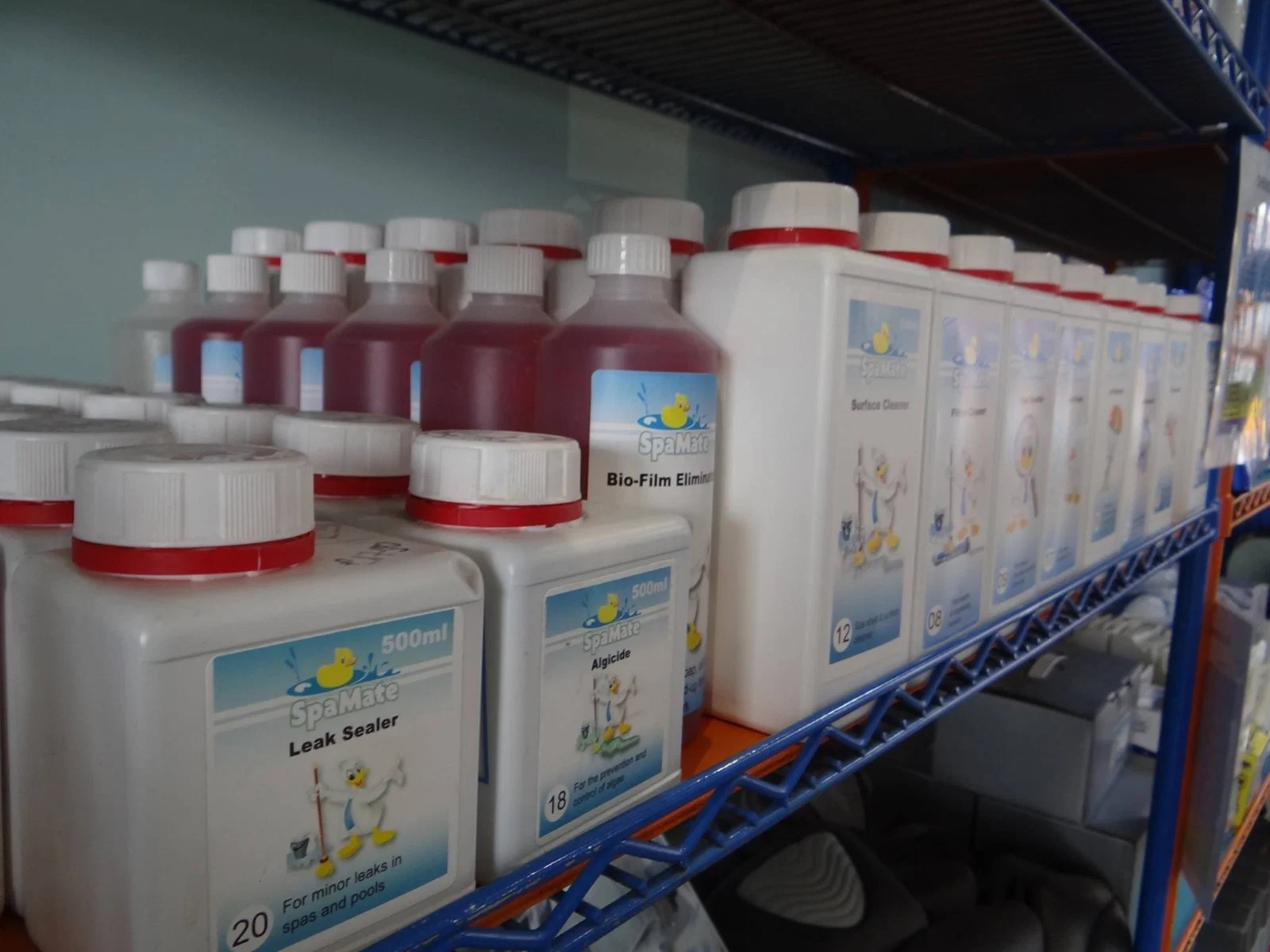
There are so many other products available that can help you keep your water clean and clear, or just make it even better!